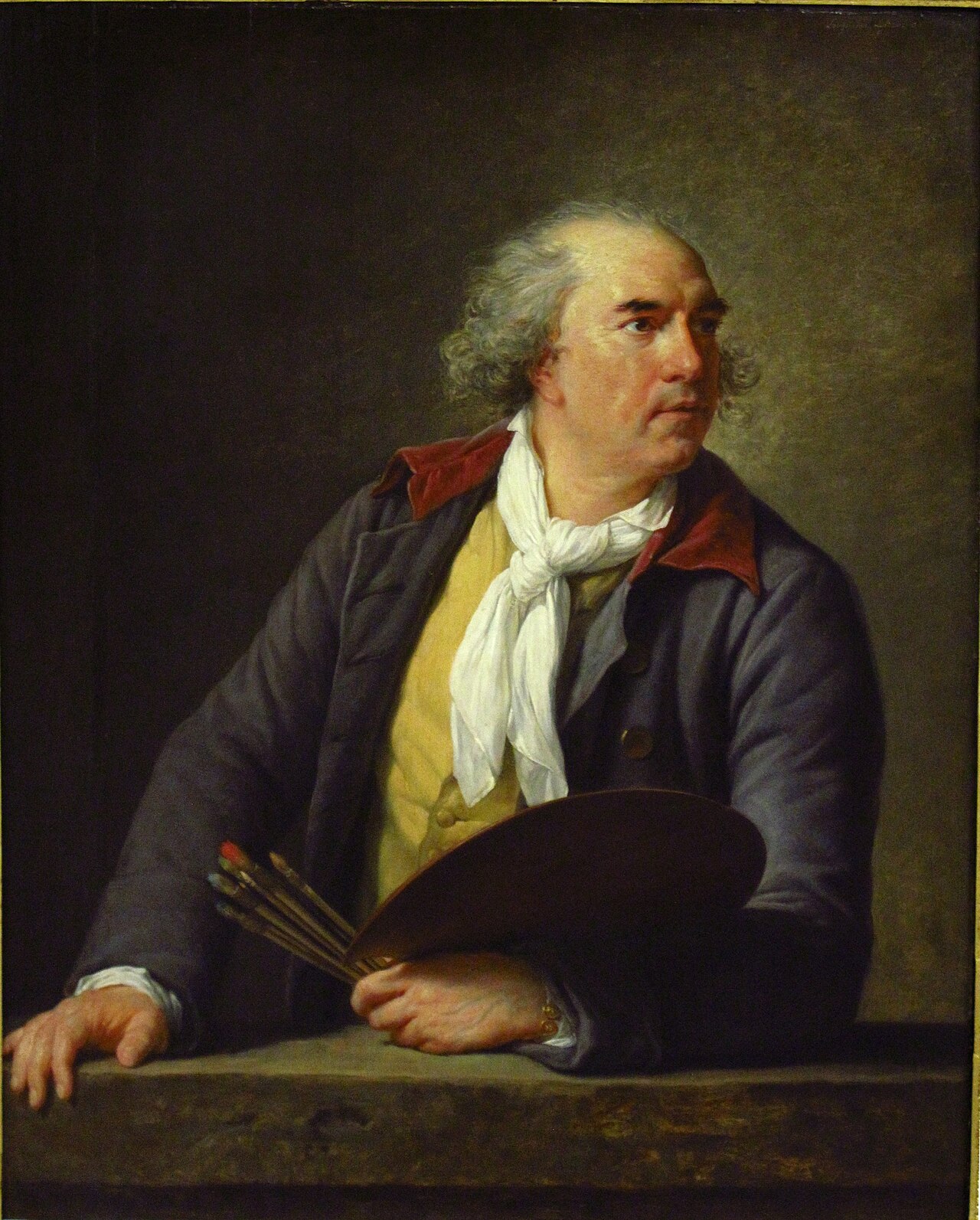
Hubert Robert
1733-1808
Hubert Robert transformed ruins into poetry. Born in Paris in 1733, he spent eleven formative years in Rome from 1754, sketching the ancient city's fragments and working briefly in Giovanni Paolo Panini's studio. The contrast between classical remains and contemporary life fascinated him; he developed the veduta and capriccio—landscapes blending real sites with imaginative elements—that would define his career. Returning to Paris in 1765, he quickly achieved prominence, exhibiting at the Salon annually until 1802 while serving as designer of the king's gardens and keeper of pictures. During the Revolution, imprisoned for ten months, he painted over fifty works in his cells. After Robespierre's fall, he joined the committee establishing the Louvre Museum. Robert's prolific output—perhaps a thousand paintings and ten thousand drawings—combined liveliness with atmospheric effect. He advised on picturesque garden designs for aristocratic patrons, conceptualizing fashionably overgrown landscapes that inspired as much as they recorded. He died in Paris in 1808.