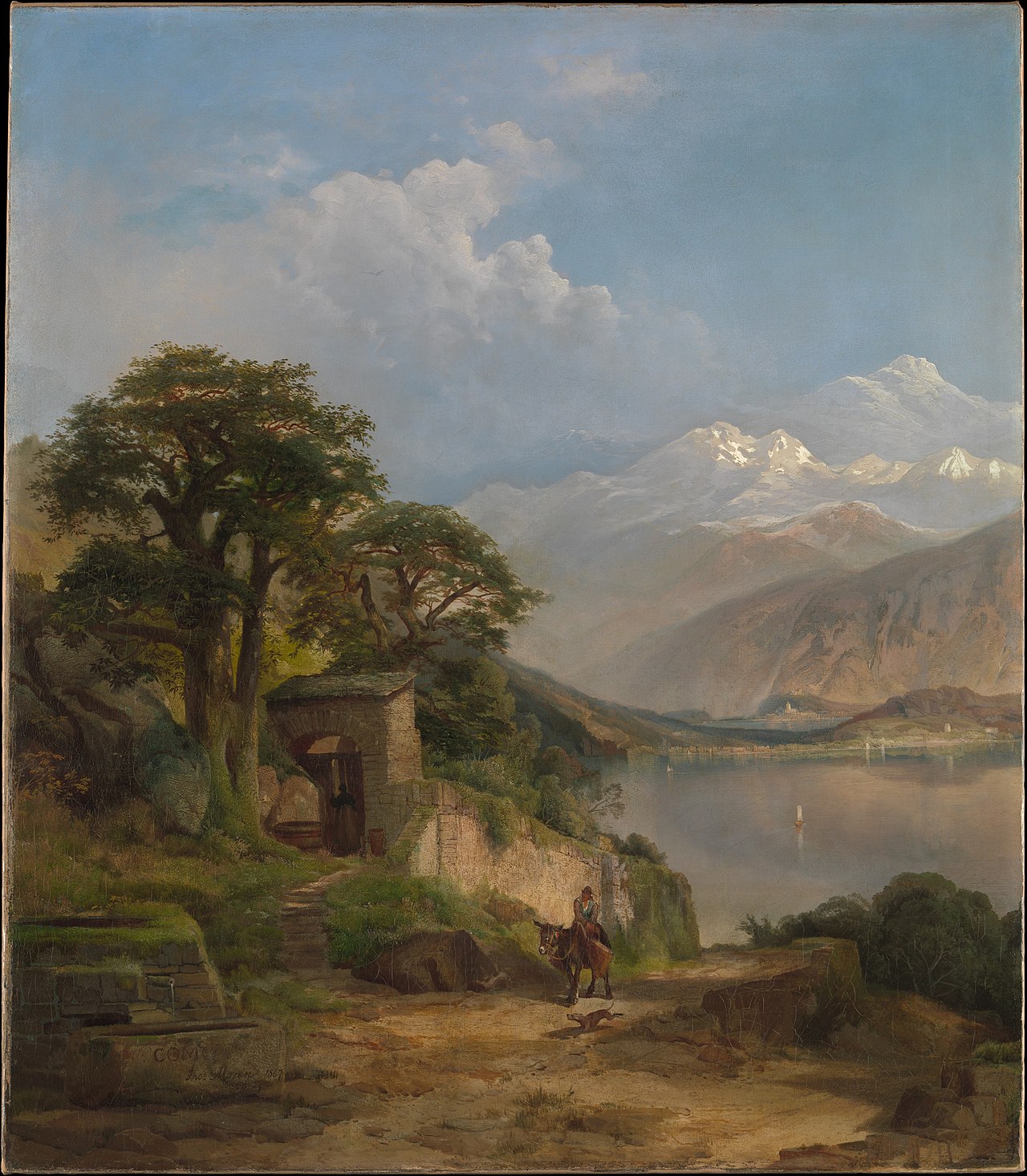
Thomas Moran
1837-1926
Thomas Moran (1837–1926) helped shape how Americans pictured their own West. Born in Bolton, Lancashire, he emigrated with his family to the United States in 1844, settling near Philadelphia, where he apprenticed in wood engraving before turning to painting. A trip to England in 1862 to study J. M. W. Turner left a lasting mark on his color and light. Working as chief illustrator for Scribner's Monthly, he joined Ferdinand Hayden's 1871 geological survey into the Yellowstone region; his sketches and watercolors, together with William Henry Jackson's photographs, helped persuade Congress to establish Yellowstone as the first national park in 1872. That year the government purchased his monumental canvas The Grand Canyon of the Yellowstone, and he later signed works "T-Y-M" in the park's honor. Associated with the Hudson River School and its western offshoot, he also worked extensively in etching and lithography alongside his wife, etcher Mary Nimmo Moran. He died in Santa Barbara in 1926; his paintings are held today in major American museums, including the Honolulu Museum of Art.