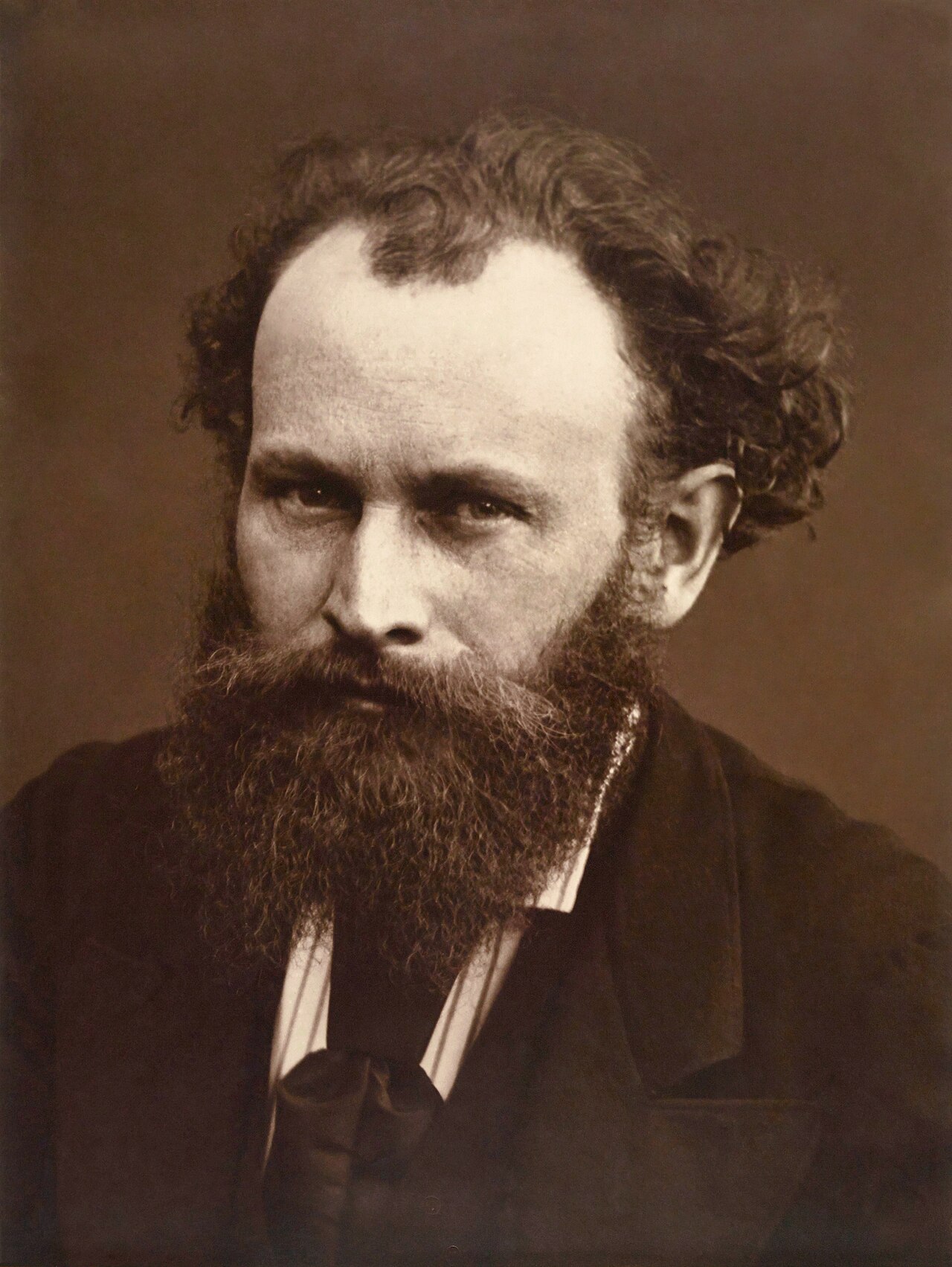
Édouard Manet
1832-1883
Édouard Manet (1832–1883) was a Paris-born painter whose work marks the hinge between Realism and Impressionism, though he never exhibited with the Impressionist group himself. Raised in an affluent, well-connected family, he trained under Thomas Couture and studied the Old Masters—Velázquez, Hals, Titian, Goya—whose influence runs through his loose brushwork and flattened tonal contrasts. His early Salon submissions, including The Spanish Singer, drew notice for their startlingly direct handling, but it was Le Déjeuner sur l'herbe (1863) and Olympia (1865) that made him notorious: modern-life subjects staged with the compositional authority of Renaissance masterpieces, and greeted with public outrage. Manet painted café life, gardens, and Parisian society with a directness that unsettled contemporaries and thrilled younger artists. He became a central figure among the Batignolles circle—Monet, Degas, Renoir, Morisot, Cézanne, Pissarro—who found in his work a model for painting their own era. Knighted in the Legion of Honour, he died in Paris in 1883; his paintings are now held in major museums worldwide.