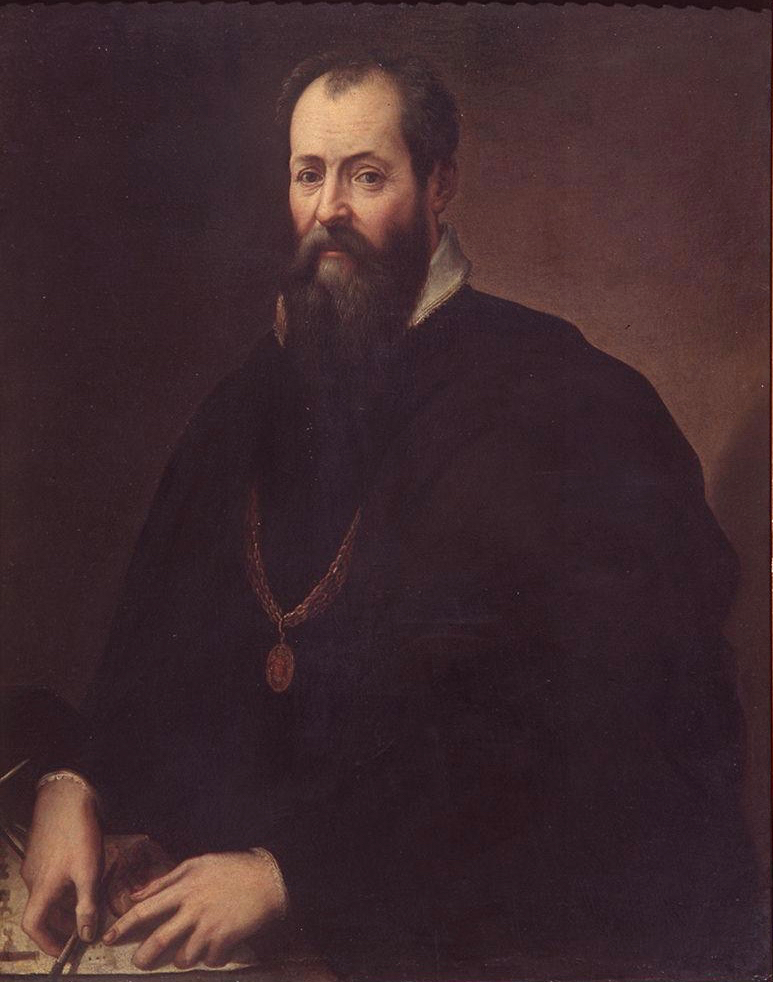
Giorgio Vasari
1511-1574
Giorgio Vasari shaped how we see Renaissance art. A Mannerist painter and architect born in Arezzo, he moved to Florence as a young man and became the cultural engine of the Medici court, designing the Uffizi Palace and the celebrated corridor connecting it to the Palazzo Pitti. His paintings—frescoes in the Palazzo Vecchio, the dome of Florence Cathedral—were admired in his lifetime, though later generations preferred other masters. Yet his true legacy lies in inventing art history itself. His Lives of the Most Excellent Painters, Sculptors, and Architects (1550) established the genre of artistic biography and introduced the term "rebirth" to describe the artistic renewal he witnessed. That concept evolved into "Renaissance," the name we still use for the era. Flawed by bias toward Florence and factual errors, Vasari's Lives remain foundational to how we understand Renaissance masters from Giotto to Michelangelo.