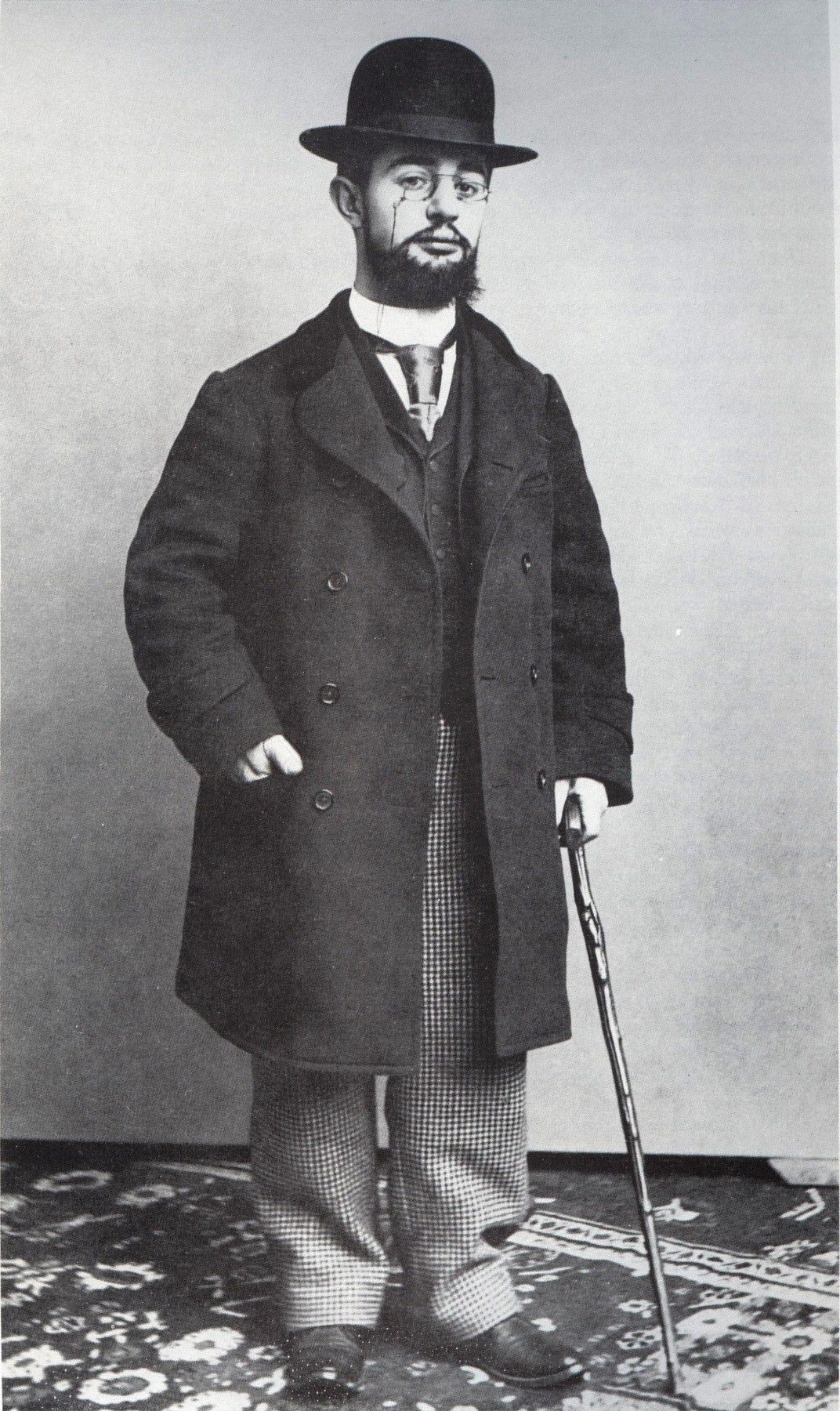
Henri de Toulouse-Lautrec
1864-1901
Henri de Toulouse-Lautrec embodied the artistic spirit of late-19th-century Paris through paintings and posters that transformed cabaret life into high art. Born into Occitan nobility in Albi in 1864, he suffered two femur fractures in adolescence that left him with stunted growth; confined largely to his short frame, he channeled his energy into drawing and painting. After studying under Léon Bonnat and Fernand Cormon in Paris, where he befriended Émile Bernard and Vincent van Gogh, he gravitated to Montmartre's cabarets and dancehalls. From 1889 onwards, his lithographic posters for the Moulin Rouge and other venues—depicting performers like La Goulue and Jane Avril with bold lines and silhouettes influenced by Japanese prints—became iconic. He painted prostitutes and performers with sympathy and psychological depth, finding kinship with those society marginalised. Alcohol and syphilis ravaged his health; he died in 1901 at thirty-six, leaving behind works that elevated entertainment culture to art.