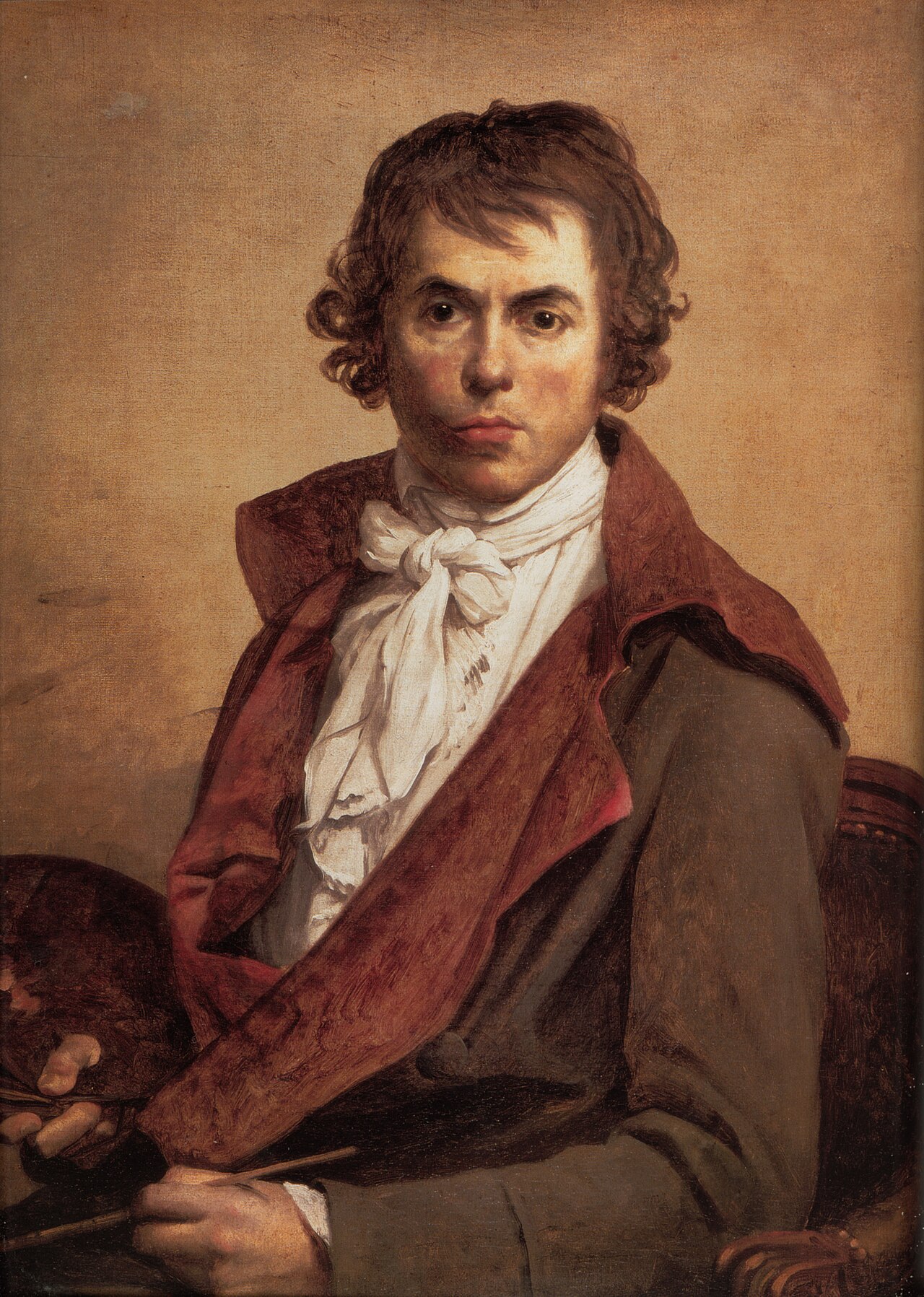
Jacques-Louis David
1748-1825
Jacques-Louis David founded neoclassical painting in France. Born in Paris to an artistic family and trained under Joseph-Marie Vien, he won the Prix de Rome in 1774 and spent the following year in Italy studying antique art. He returned to Paris in 1780 determined to replace rococo's frivolity with art of grandeur, simplicity, and moral virtue. The Oath of the Horatii, The Death of Socrates, and The Lictors Bringing Brutus the Bodies of His Sons—exhibited at the Salon in 1785, 1787, and 1789—established him as the era's dominant painter and set the standard for academic painting for a century. During the French Revolution, David joined the Jacobin Club, served as president of the Convention, and voted for Louis XVI's execution. He created paintings glorifying the Revolution's martyrs and organized public festivals. After Robespierre's fall in 1794, David was imprisoned but released the following year. He later allied with Napoleon, becoming first painter to the emperor in 1804. His Coronation of Napoléon marked a shift toward richer color and emotion. After Waterloo, David went into exile in Brussels, where he spent his final years painting mythological subjects and portraits until his death in 1825.