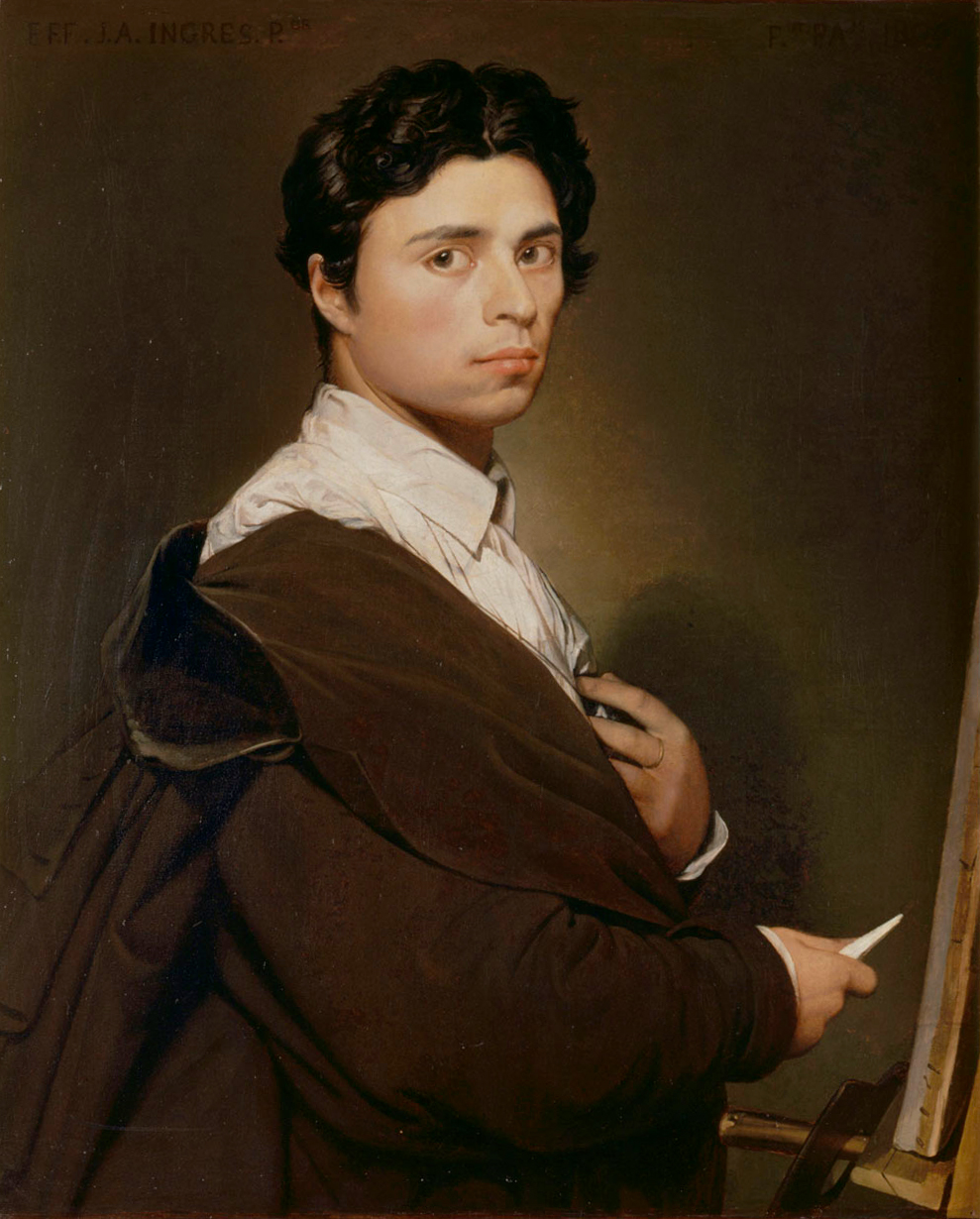
Jean-Auguste-Dominique Ingres
1780-1867
Jean-Auguste-Dominique Ingres stood as the guardian of Neoclassical tradition against the rising tide of Romanticism in nineteenth-century France. Born in Montauban in 1780, he trained under Jacques-Louis David in Paris before winning the Prix de Rome in 1801 with his painting of Agamemnon's ambassadors. Rather than return quickly to France, he remained in Italy from 1806 to 1824, studying Raphael and the Renaissance masters while supporting himself through portraiture and sending ambitious history paintings to the Paris Salon, where critics initially found his work archaic and strange. His breakthrough came in 1824 with The Vow of Louis XIII, which established him as the leader of French Neoclassicism. Returning to Rome as director of the French Academy in 1835, he spent his final decades in Paris creating new versions of earlier works, female nudes, and designs for stained glass. His insistence on drawing as the foundation of painting, combined with his deliberate distortions of form and anatomy—evident in works like the Grand Odalisque—made him an unexpected precursor of modern art, influencing Matisse, Picasso, and Cézanne.