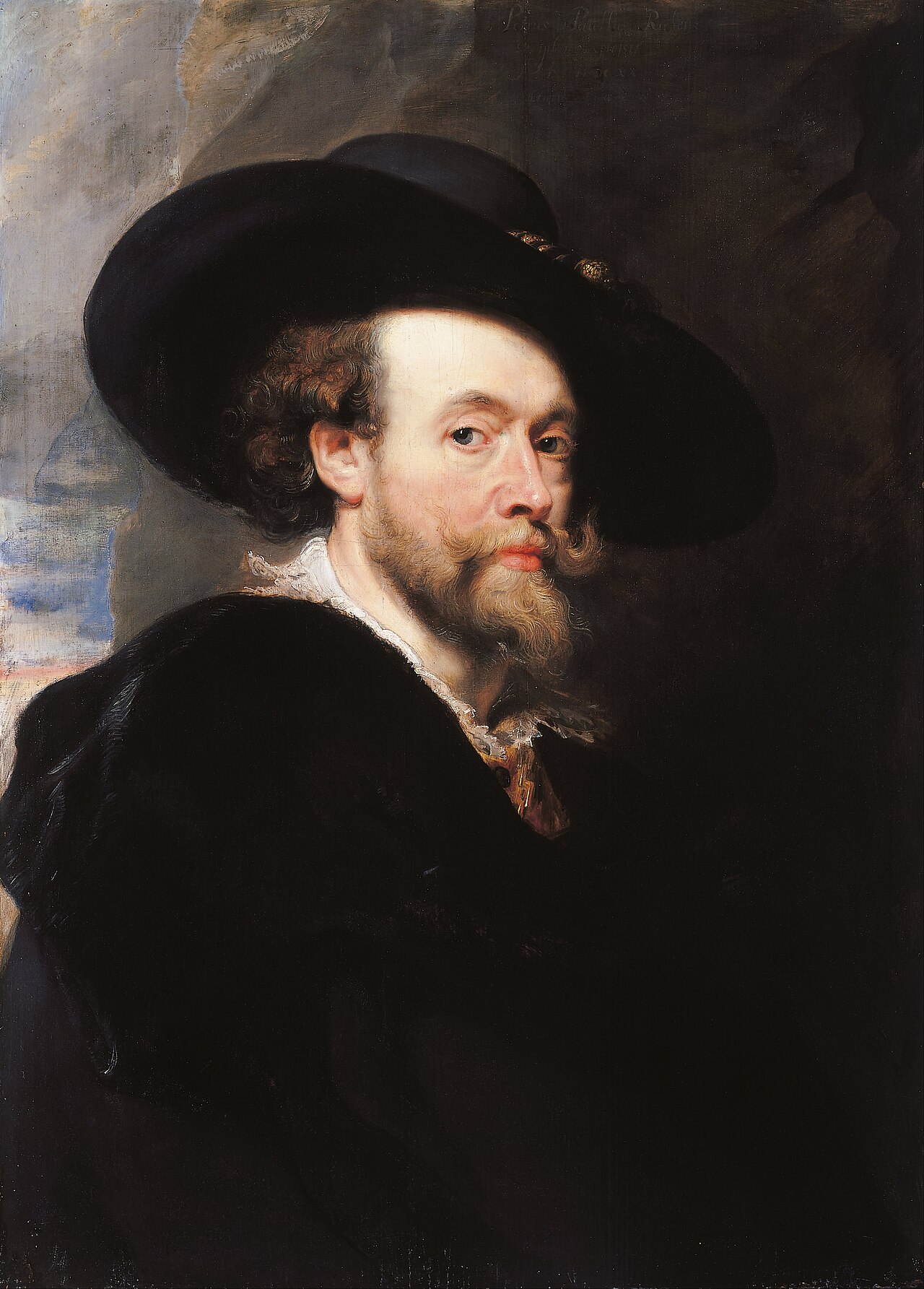
Peter Paul Rubens
1577-1640
Peter Paul Rubens commanded the visual culture of seventeenth-century Europe. Born in Siegen in 1577 to Protestant refugees from Antwerp, he returned to the city at twelve and established himself as the defining artist of Flemish Baroque. His eight years in Italy—studying Titian, Tintoretto, and the classical masters—crystallized a style of unparalleled energy: muscular compositions alive with colour and movement, charged with classical learning and Counter-Reformation piety. Back in Antwerp from 1609, he ran an enormous workshop that fed the insatiable appetite of European courts and collectors for altarpieces, mythologies, and allegories. Rubens was also a humanist scholar, diplomat, and connoisseur, knighted by both Spain and England. His sensual, full-figured women became synonymous with abundance itself. He died in Antwerp in 1640, leaving nearly 1,400 works and reshaping what European painting could be.