Charles Jacque
France1813-1894
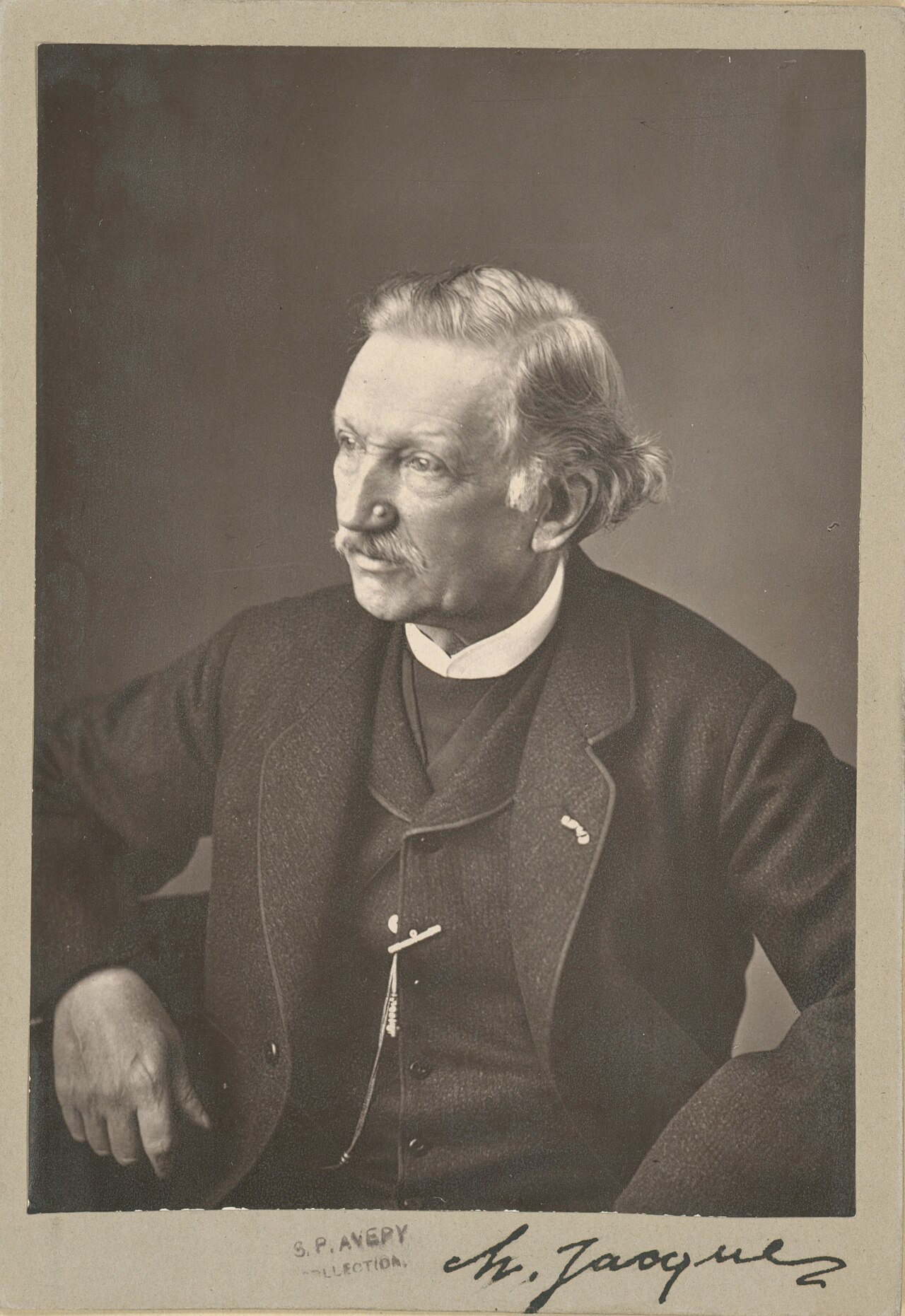
Charles Jacque painted and engraved the rural world—shepherds with their flocks, farmyards, working animals—with the directness of someone who watched them closely. He came to Barbizon in 1849 alongside Jean-François Millet, part of a circle that made the village the centre of French landscape painting. But Jacque's real mastery lay in etching. He learned engraving in the army, and by the 1840s was publishing etchings that caught the attention of Baudelaire, who praised their boldness and freedom. He revived seventeenth-century printmaking techniques alongside Félix Bracquemond and Félix Buhot, creating original plates marked by a Dutch character—spontaneous vignettes that grew into larger, more ambitious compositions. He also illustrated major literary works, from Shakespeare to Goldsmith. His sons followed him as painters and engravers of rural life.
Collection
Œuvres
48 œuvres
Autres œuvres
Contribuer
Une œuvre nous manque ?
Partagez une image — un modérateur l’examine avant son entrée dans la galerie.