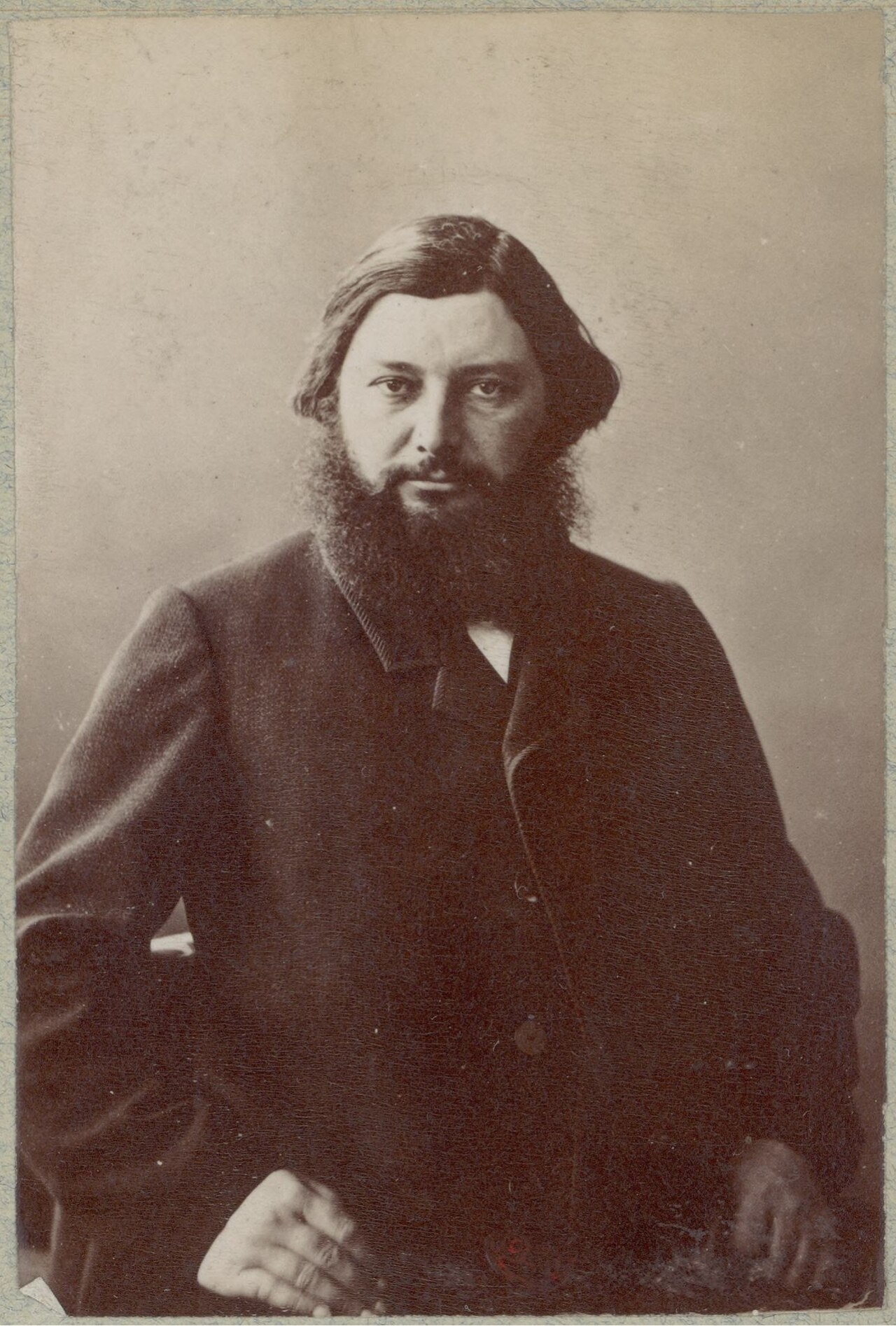
Gustave Courbet
1819-1877
Gustave Courbet (1819–1877), born in Ornans in the Franche-Comté, became the leading figure of French Realism, painting the life he actually saw rather than the idealized subjects favored by academic tradition. His early Salon works, After Dinner at Ornans, The Stone Breakers, and A Burial at Ornans, scandalized Paris by giving peasants and ordinary townspeople the monumental scale once reserved for history painting; the Burial's crowd of unglamorized mourners was seen as a deliberate affront to convention. Rebuffed at the 1855 Exposition Universelle, he built his own pavilion to show The Artist's Studio, staking out his independence from official taste. He went on to paint landscapes, seascapes, hunting scenes, nudes and still lifes with the same rough, direct handling. A committed republican, he was imprisoned after the Paris Commune and spent his final years in exile in Switzerland, where he died. His refusal of academic idealism shaped later Impressionist and Cubist painters.