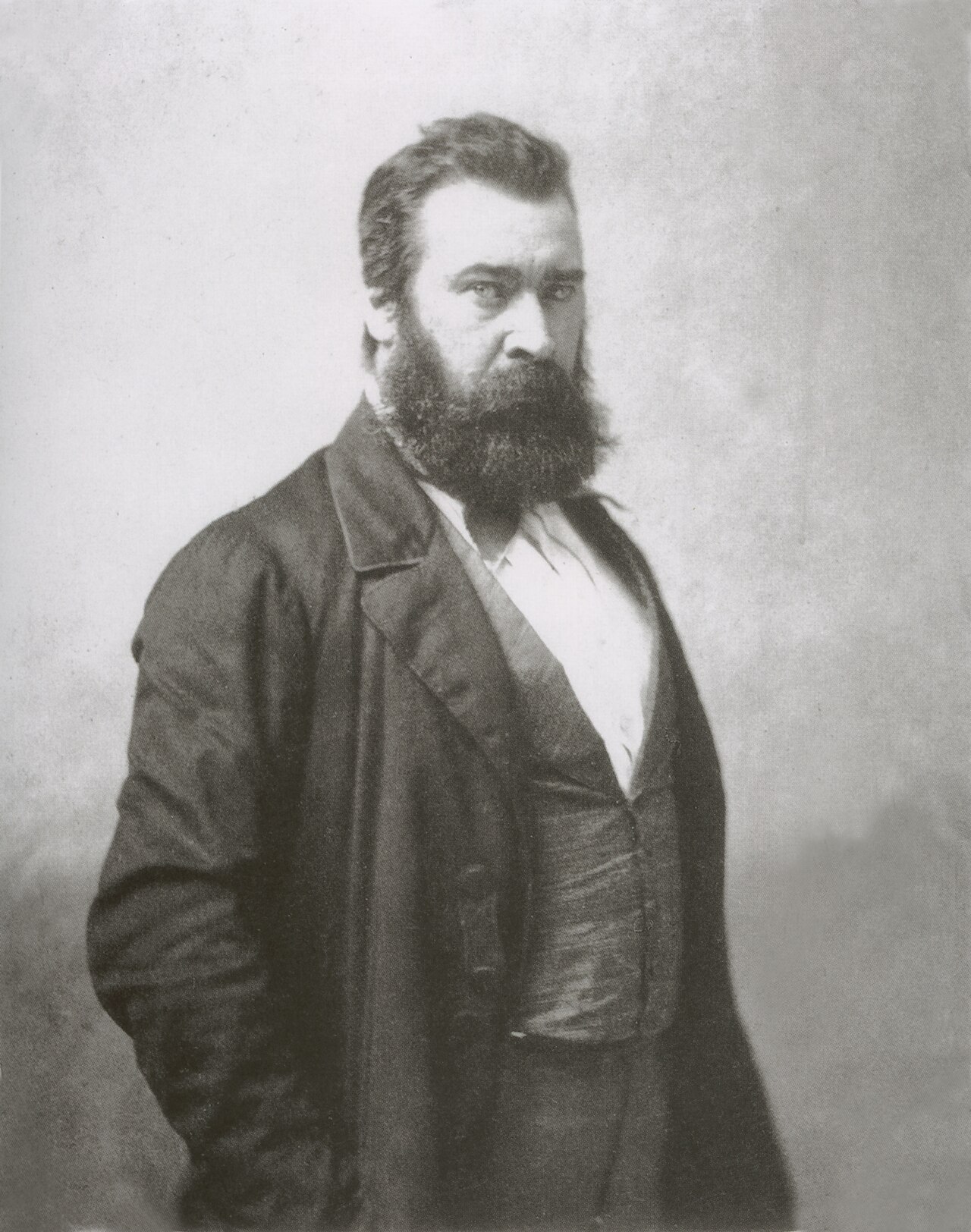
Jean-François Millet
1814-1875
Jean-François Millet (1814–1875) was a French painter who emerged as a central figure in the Barbizon school and the Realism movement. Born into a farming family in Normandy, he trained in Paris under Paul Delaroche before settling in the village of Barbizon in 1849. There he devoted himself to depicting peasant labor with unprecedented dignity and social gravity. Works like The Sower, The Gleaners, and The Angelus—painted with thick brushwork and somber tonality—sparked fierce political debate by refusing to sentimentalize rural life. Yet his unflinching observation of working people, grounded in his own childhood experience, gave his paintings moral weight. By the 1860s, his reputation soared; a major exhibition at the 1867 Paris Exposition secured his standing as a master. In his final years, he turned increasingly to landscape and pastel, producing luminous works like Spring. Van Gogh and later modernists drew profound inspiration from his example.