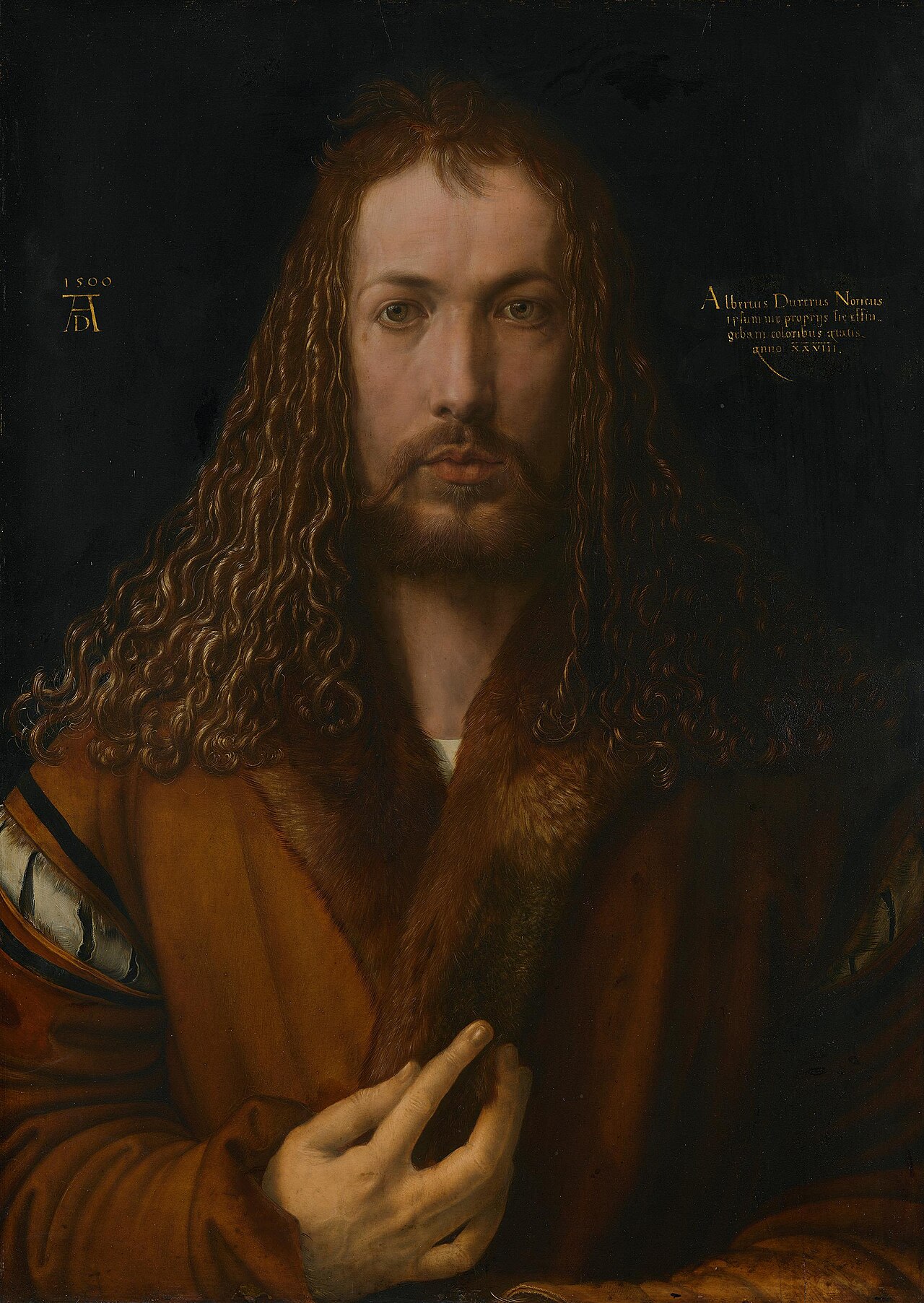
Albrecht Dürer
1471-1528
Albrecht Dürer (1471–1528) was a painter, printmaker, and theorist of the German Renaissance, born and based for most of his life in Nuremberg. Trained by his goldsmith father and then by the painter Michael Wolgemut, he built his early reputation on woodcuts of unprecedented finesse and complexity, including the Apocalypse series, before mastering the engraver's burin in works such as the Prodigal Son, Saint Eustace, and Adam and Eve. Two journeys to Italy exposed him to Bellini, Mantegna, and Italian ideas of proportion and perspective, which he fused with Northern precision in portraits, altarpieces, and studies like the Great Piece of Turf, Young Hare, and Praying Hands. From 1512 he worked under the patronage of Emperor Maximilian I. Dürer's theoretical writings on geometry and human proportion, alongside his introduction of classical and nude forms into German art, made him the central figure of the Northern Renaissance, and his prints carried his innovations across Europe with remarkable speed.