Sharaku
JapanContemporary
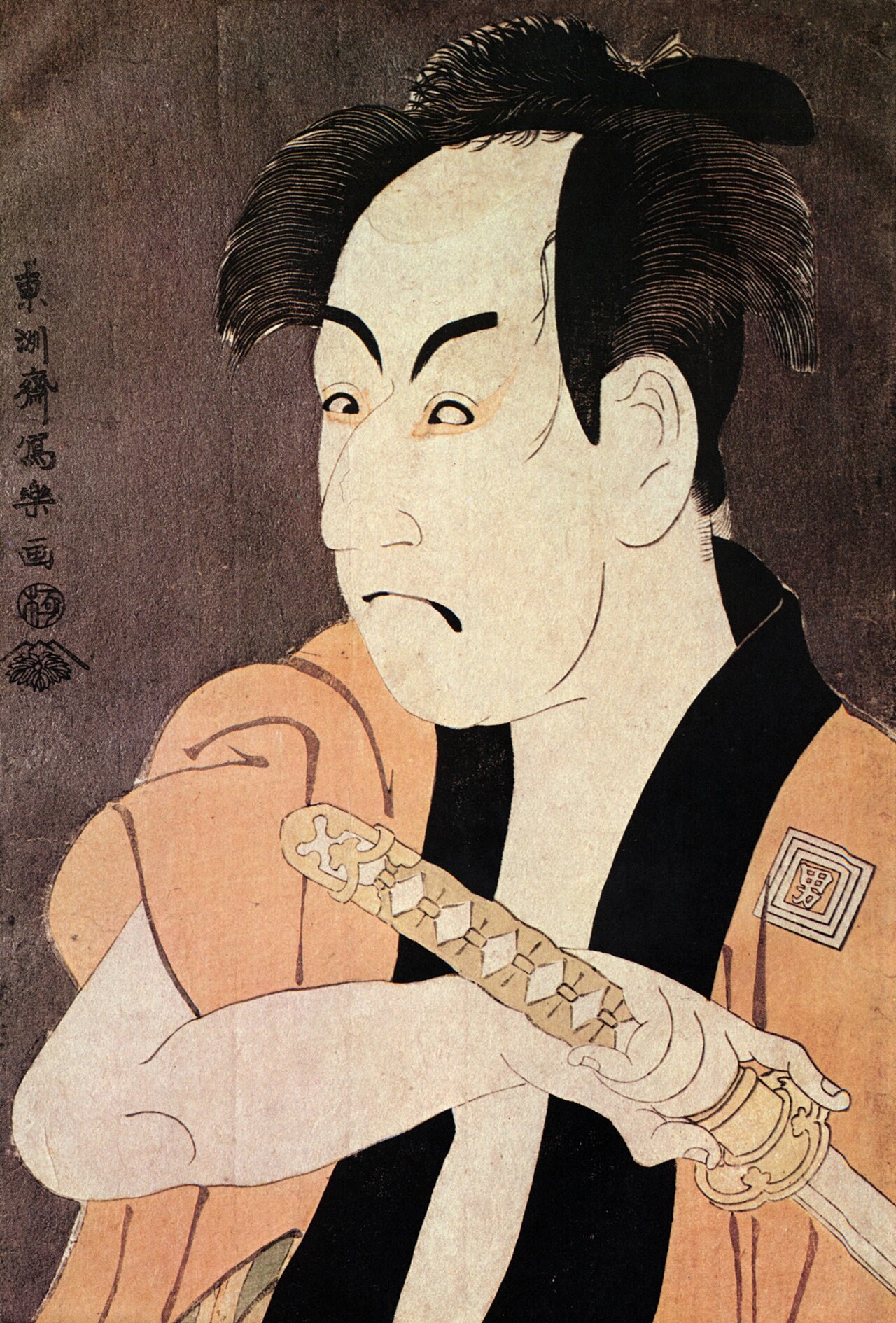
Tōshūsai Sharaku is one of ukiyo-e's great enigmas: a print designer who appeared in Edo in 1794, produced roughly 144 known woodblock portraits of kabuki actors and sumo wrestlers in about ten months, and then vanished. His early ōkubi-e — large-headed bust portraits set against glittering black mica grounds — are prized for a psychological realism unusual for the genre: rather than the idealized beauty favored by contemporaries such as Utamaro, Sharaku rendered actors with unflattering noses, wrinkles, and exaggerated, almost caricatural expressions caught mid-gesture on stage. His later prints, smaller in format and calmer in composition, are generally judged less inspired. Nothing certain is known of his true identity, training, or life dates; over the past two centuries scholars have proposed dozens of candidates, from a Noh actor to a minor poet, without consensus. His prints survive in major collections worldwide, including the Metropolitan Museum, the Rijksmuseum, and the Tokyo National Museum.
संग्रह
कलाकृतियाँ
2 कार्य
अन्य कार्य
योगदान दें
कोई ऐसी कृति जानते हैं जो हमारे पास नहीं है?
एक छवि साझा करें — गैलरी में शामिल होने से पहले एक मॉडरेटर उसकी समीक्षा करता है।